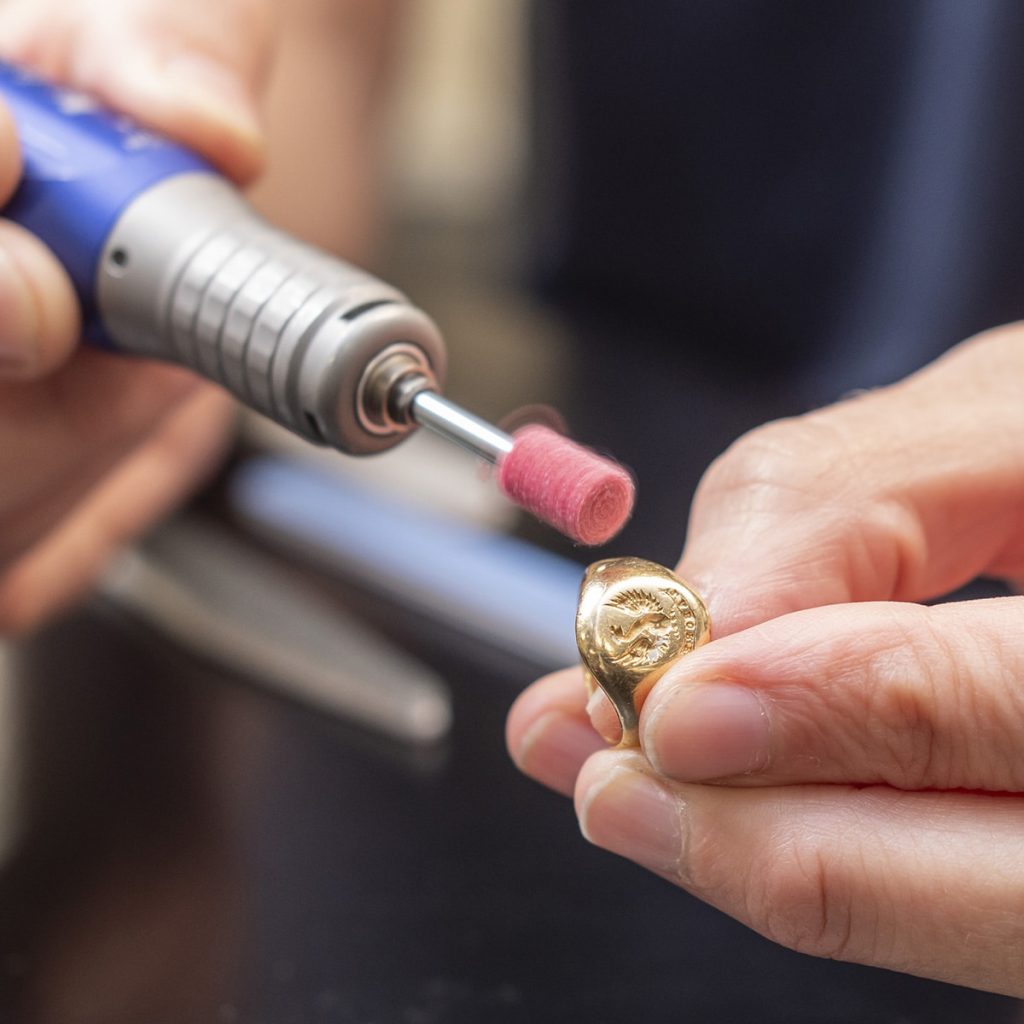
If you’ve recently watched The Repair Shop: Beyond the Barn – Episode 7 and found yourself fascinated by the jewellery polishing process, you’re not alone. There’s something very satisfying about watching a dull or scratched piece of jewellery brought back to its former glory.
The good news is that the principles behind that beautiful finish are surprisingly simple. With the right polishing compounds, a high-quality cotton polishing cloth and a little patience, you can give gold and silver pieces a renewed shine at home.
In this guide, we’ll look at how to polish a gold or silver ring by hand using Tripoli and rouge, the two traditional polishing compounds used to progressively refine a metal surface.
Whether you’re looking after your own jewellery, a hobby jeweller or running a small jewellery business, understanding how these compounds work is an invaluable skill.
If you’d like to see the restoration that inspired this guide, watch the episode on BBC iPlayer here.
In this guide
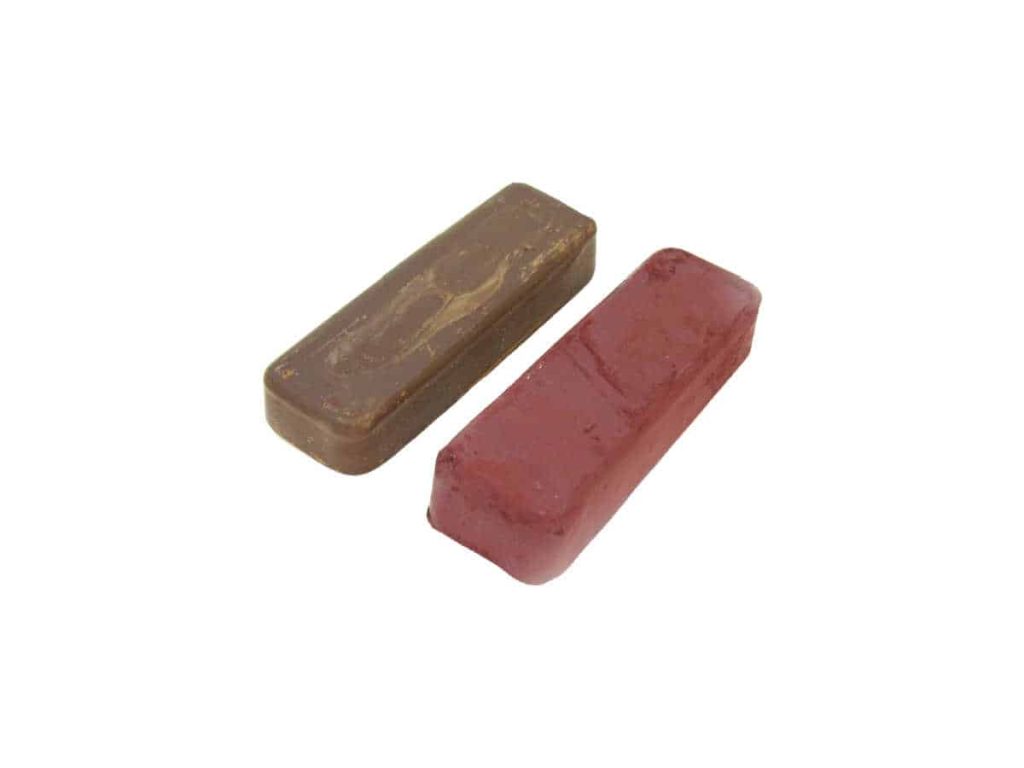
Tripoli and rouge are polishing compounds used to remove fine scratches and marks from metal and produce a progressively brighter finish.
They are normally used in sequence rather than interchangeably.
Tripoli is used before rouge. It is a relatively abrasive compound designed to cut and smooth the surface of the metal.
It can help reduce the appearance of fine scratches and marks left by previous finishing processes, leaving the surface smoother and ready for the final polishing stage.
Think of Tripoli as the pre-polish.
Rouge is finer and used after Tripoli to produce a final bright, reflective finish.
Think of rouge as the finishing polish.
Using the two compounds in the correct order is important. There is little benefit in putting a fine finishing compound on to a surface that still has deeper scratches that need to be removed.
To polish a gold or silver ring by hand, you’ll need:
- A Micro-Mesh cotton polishing cloth
- Tripoli polishing compound
- Rouge polishing compound
- Washing-up liquid
- A soft brush
- Good lighting so you can inspect the surface as you work
If you are a hobby jeweller or small jewellery business, it’s worth keeping separate cloths for different compounds. This helps prevent coarser Tripoli particles from contaminating your final rouge polishing stage.
Dirt, grease and everyday grime can interfere with polishing. Wash the piece gently using an appropriate jewellery cleaning method and make sure it is completely dry before you begin.
If your ring has gemstones, inspect the claws, bezel or other settings carefully.
If anything appears loose, damaged or insecure, it’s better to have the piece checked by a professional jeweller before polishing it.
It’s important to take extra care with plated jewellery.
Polishing removes a very small amount of material from the surface, and repeated or aggressive polishing can eventually remove plating and expose the metal underneath.
If you’re unsure whether your jewellery is solid gold, gold-filled, vermeil or plated, check with the manufacturer or a jeweller before proceeding.
Not every piece of jewellery is supposed to be completely bright and polished.
Some jewellery has a deliberate matt, brushed or oxidised finish, and polishing can remove or alter that effect. Antique and vintage jewellery may also have surface characteristics that are part of its appeal.

BENCH TIP: Struggling to get into a small recess or awkward detail?
Wrap a small piece of the polishing cloth around the end of a pencil, wooden dowel or similar tool. Hold it securely and use it to gently work polishing compound into areas that are difficult to reach with your fingers. This can be particularly useful for narrow grooves, inside curves and detailed areas where you need a little more control, like the inside of a ring.
It’s tempting to load your cloth with polishing compound, but more isn’t necessarily better.
Start with a small amount and add more only when necessary.
Don’t use the same cloth for Tripoli and rouge.
Cross-contamination can introduce coarser particles into your final polishing stage.
Hand polishing is a gradual process. Work methodically and check the piece frequently rather than trying to achieve the finished result in one pass.
Remember that polishing is a process of removing a tiny amount of metal from the surface.
Repeated aggressive polishing can soften crisp edges, details and textures, particularly on delicate jewellery.
Some gemstones can be damaged by certain polishing or cleaning methods, and polishing compounds can become lodged around settings.
If you’re unsure about a gemstone, an older piece of jewellery or a delicate item, professional advice is the safest option.
If you’re learning to make jewellery, understanding polishing is just as important as learning to solder, saw or form metal.
A piece can be transformed by a good final finish, while poor polishing can leave scratches, compound residue or uneven surfaces that detract from the overall result.
For hobby jewellers and small jewellery businesses, having a selection of polishing cloths and compounds on the bench means you can carry out finishing work as part of your own making process rather than relying on a third party.
Tripoli and rouge are relatively simple products, but learning how and when to use them is an important part of developing good jewellery-finishing skills.
If The Repair Shop has inspired you to have a go at polishing your own jewellery, you don’t need to start with a professional polishing motor.
For light hand polishing, a Micro-Mesh cotton polishing cloth, Tripoli and rouge give you the basic tools needed to understand the traditional two-stage polishing process.
For hobby jewellers and small jewellery businesses, they’re also useful additions to a jewellery-making bench for finishing and maintaining your own work.
Shop everything you need in our online shop and start experimenting with your own jewellery finishing.
-
 Cotton Polishing Cloth by Micro-Mesh | 12" Square
£3.22 incl VAT
-
 Small Metal Polishing Compound Bars 4x1" - All Materials
£2.51 incl VAT
Cotton is a popular material for jewellery polishing because it is soft enough for delicate finishing work while being capable of carrying polishing compounds effectively.
For jewellers, having several cloths available means you can dedicate individual cloths to different compounds and different stages of finishing.
This is especially useful when moving from a cutting compound such as Tripoli to a finer finishing compound such as rouge.
Yes – although there are some limitations.
Professional jewellers often use polishing motors because they provide much more cutting power and allow metal to be polished quickly and consistently.
Hand polishing is considerably slower, but it can be a useful technique for:
- Jewellery maintenance
- Light surface polishing
- Small finishing jobs
- Jewellery-making hobbyists
- Makers without a polishing motor
- Final hand-finishing
- Small jewellery businesses
For a heavily scratched ring or a piece requiring significant restoration, professional equipment and experience will generally produce a better result. But for bringing back some of the shine to a lightly marked piece, hand polishing can be an enjoyable and surprisingly effective technique.
Yes, light surface polishing can be done by hand using an appropriate polishing cloth and compound. However, take particular care with plated jewellery, delicate pieces, gemstones and valuable or antique rings.
Yes. Silver is commonly polished using compounds such as Tripoli and rouge. Start gently and inspect the surface regularly.
Tripoli is used first as the cutting/pre-polishing compound, followed by rouge as the finer finishing compound.
It’s better to use separate cloths. Keeping compounds separate helps prevent coarser particles from contaminating your final polishing stage.
It depends on the gemstone, setting and condition of the jewellery. Exercise caution around stones and settings, and seek professional advice if you’re unsure.
Light scratches can often be reduced through polishing. Deeper scratches may require additional preparation or professional refinishing before a high-shine finish can be achieved.
The basic principle of using progressively finer polishing compounds is widely used in jewellery finishing. Professional jewellers typically use powered equipment, however, which makes the process considerably faster and gives greater control over heavier polishing work.
Using polishing compounds such as Tripoli and rouge with a polishing cloth can wear away or remove the rhodium plating on white gold. Rhodium is a thin surface coating, and polishing may expose the underlying metal or alter the item’s appearance. Consult a professional jeweller if you’re unsure how to proceed.
Looking for more ways to polish jewellery by hand?
Read our guide below for another approach to achieving a beautiful finish using Micro-Mesh abrasives.